 SY DOLL
 Irontech DOLL
 YQ DOLL
 Aibei DOLL
 JL DOLL
 Douls Castle
 JX DOLL
 Fire DOLL🔥
 Ridmii DOLL
 Jarliet DOLL
 Xise DOLL
 Starpery DOLL
 Galaxy Dolls
 COS DOLL

Real Lady Doll EVO Max 2.0: Discover the Next Generation of S-Class Realism
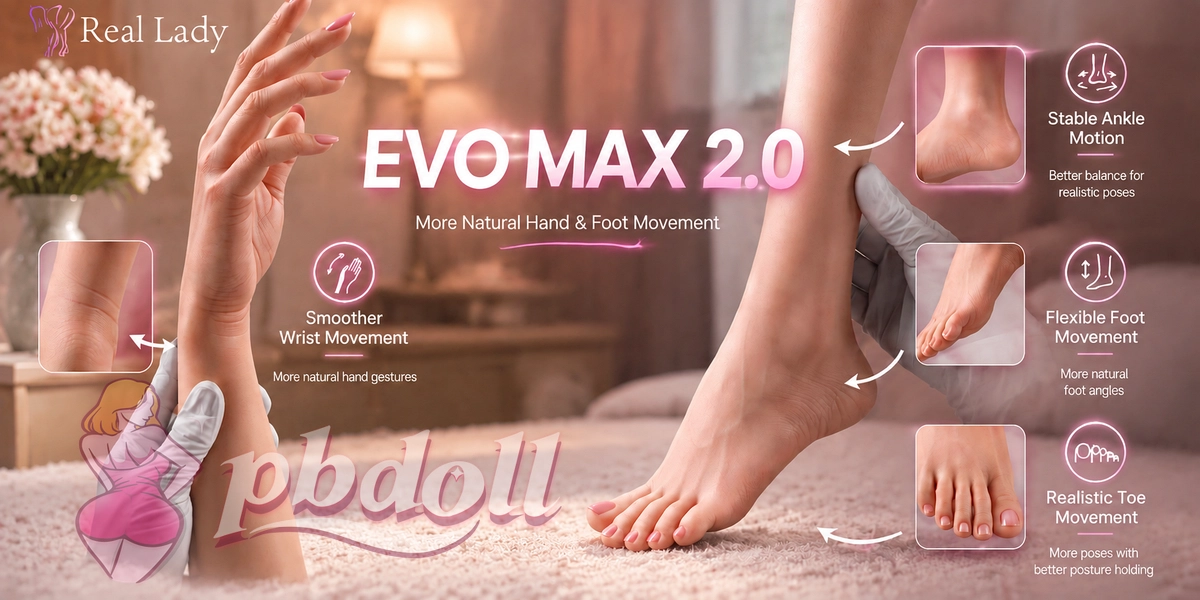
Creating a lifelike appearance involves much more than exterior design. The flexibility of the internal skeleton, the stability of different positions, and the smoothness of joint transitions all influence how naturally a doll can be posed.
Real Lady Doll's EVO Max 2.0 introduces further refinements to its articulated skeleton, with particular attention to movement around the wrists and feet. Instead of focusing only on adding articulation points, this generation aims to improve the way individual joints work together, providing more options for balanced positioning and natural-looking poses.
The Development of EVO Max 2.0
The first EVO skeleton provided the foundation for flexible positioning and everyday pose adjustments. EVO Max expanded on that design with double elbow joints, giving the arms additional articulation and allowing for more varied upper-body positioning.
Building on these previous generations, EVO Max 2.0 introduces further changes to joint movement and positioning. These adjustments are intended to improve overall flexibility and provide more ways to coordinate the movements of different body parts.
Notable features of the updated design include:
- Enhanced Side-to-Side Ankle Articulation
- Improved Downward Forefoot Flexibility
- Articulated Toes with Structural Protection
- Refined Wrist and Hand Positioning
By combining these refinements, the EVO Max 2.0 skeleton is designed to offer more positioning possibilities while helping different joints work together in a more coordinated way.
A Closer Look at the EVO Skeleton
EVO vs EVO Max vs EVO Max 2.0
The EVO skeleton series has evolved through several stages, with each version introducing different structural features. EVO established the original articulation system, EVO Max added double elbow joints, and EVO Max 2.0 focuses on further refinements to wrist, ankle, forefoot, and toe movement.
| Version | Design Characteristics | Potential Advantages |
|---|---|---|
| EVO | Original articulated skeleton structure | A foundation for everyday positioning |
| EVO Max | Double elbow joint design | More options for arm articulation |
| EVO Max 2.0 | Additional refinements to the wrists, ankles, forefeet, and toes | More versatile hand and foot positioning |
What Is New in EVO Max 2.0?
Greater Freedom of Ankle Movement
The updated ankle articulation provides additional flexibility when adjusting the foot from side to side. This can help create different foot angles and improve the visual continuity between the lower leg, ankle, and foot when arranging a pose.
More Flexible Forefoot Positioning
Improved downward bending at the forefoot allows the front portion of the foot to be positioned at different angles. This added flexibility provides more control over foot placement and offers additional options for standing, seated, and footwear-inspired poses.
Enhanced Toe Articulation
The articulated toe structure makes it possible to adjust individual toes more freely. Protective features around the internal toe mechanism are intended to help maintain the structure during routine positioning and handling.
Improved Wrist Alignment
Refined wrist positioning offers additional flexibility when adjusting the angle of the hand relative to the forearm. This makes it easier to explore different hand placements and create a more continuous visual line between the wrist and arm.
EVO Max 2.0 Articulation in Detail
Flexible Wrist Movement and Hand Placement
Exploring the Posing Advantages of EVO Max 2.0
An articulated skeleton is most useful when its individual joints can be adjusted to create a variety of positions. The quality of a pose depends not only on the movement available at each joint, but also on how the different parts of the body fit together.
With its focus on the wrists and lower extremities, EVO Max 2.0 is designed to provide more detailed control over hand and foot placement, giving users greater freedom when fine-tuning their preferred poses.
More Adjustable Standing Poses
Flexible ankle positioning provides more ways to adjust the direction of the feet. These small adjustments can help improve the overall balance and appearance of a standing position.
Better Adaptability for High Heels
The combination of ankle and forefoot articulation creates additional possibilities for positioning the feet at higher angles. This can be particularly useful when arranging poses that involve high heels or other footwear.
Greater Variety in Crossed-Leg Poses
Additional adjustment options around the feet help users refine the details of different seated positions. More flexible foot placement can contribute to a relaxed and visually coordinated final pose.
More Natural-Looking Hand Positions
Adjustable wrist angles make it easier to change the direction of the palms and refine the relationship between the hands and forearms. These details provide additional flexibility when creating different gestures and completing an overall pose.
A Closer Look at Articulated Toe Design
Coordinated Articulation from the Hands to the Feet
EVO Max 2.0 places greater emphasis on the details that influence how a pose looks. Adjustments to wrist alignment, ankle flexibility, forefoot movement, and toe articulation provide additional ways to refine body positioning.
These developments work as part of a broader structural approach rather than as isolated upgrades. By bringing several articulation refinements together, the design aims to provide more options for adjusting poses and positioning smaller body details.
For anyone interested in skeleton construction and posing flexibility, EVO Max 2.0 offers an updated approach to articulated doll design, with particular attention to the movement and positioning of the hands and feet.
EVO Max 2.0 builds on the EVO skeleton platform with refinements to wrist, ankle, forefoot, and toe articulation, offering additional flexibility for detailed positioning and a wider range of poses.
FAQs
What makes the EVO Max 2.0 skeleton different from previous versions?
EVO Max 2.0 builds on earlier EVO skeleton designs with refinements to the ankles, forefeet, toes, and wrists. These changes are intended to provide more positioning options and greater flexibility when creating different poses.
Does EVO Max 2.0 only add more joints?
No. The upgrade also focuses on refining how existing joints move and interact. The goal is to improve coordination between different parts of the skeleton rather than simply increasing the number of articulation points.
How does the improved ankle design help with posing?
Refined ankle articulation allows more adjustment in foot orientation. This can help when arranging standing positions, seated poses, and different footwear styles.
What are the benefits of articulated toes?
Articulated toes provide additional flexibility for adjusting foot positions and creating a wider variety of poses. The design also incorporates protective features for the internal toe structure.
Why is wrist flexibility important for natural-looking poses?
Wrist positioning affects the angle of the hands and their alignment with the forearms. Greater flexibility provides more options for adjusting hand gestures and refining the overall pose.
How should I handle and maintain the EVO Max 2.0 skeleton?
Support the doll's body when changing positions and adjust joints gradually without forcing them beyond their intended range of movement. Follow the manufacturer's instructions for handling, care, and storage.
Explore Real Lady Doll

Real Lady Doll
$2,908.45

Real Lady Doll
$2,908.45

Real Lady Doll
$2,908.45

Real Lady Doll
$2,954.00